
For macOS 1.14, use the official standalone SFM app on macOS 13 or newer. Old profiles/settings are not inherited automatically. Back up before upgrading; platform differences are explained here while common configuration steps live in the user guide.
Download the SFM standalone app
Choose an SFM standalone PKG or ZIP from official releases; follow its file type to install or extract it. Existing Homebrew users can follow the sfm cask, currently using the 1.14.2 Universal PKG. Ordinary sing-box Darwin archives are CLI core files. This page is for macOS; the Windows illustrated guide is in Chinese.
Add a profile
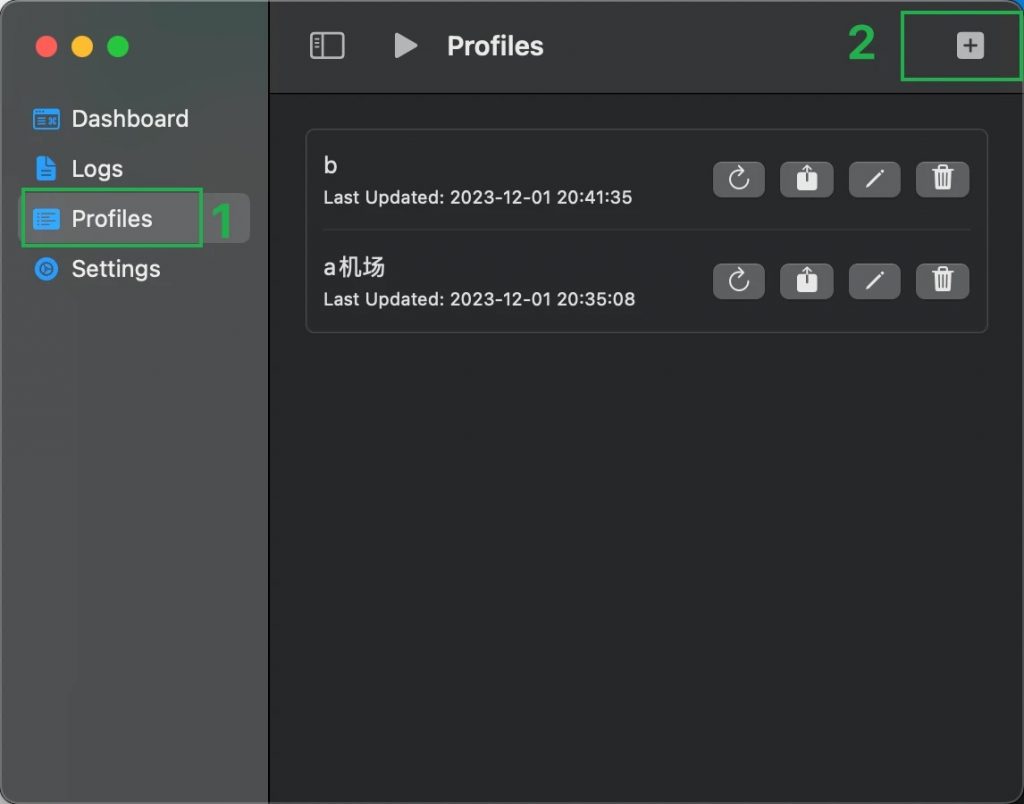
The images below show profile selection, the dashboard and groups. Prepare a complete sing-box configuration before adding a profile.
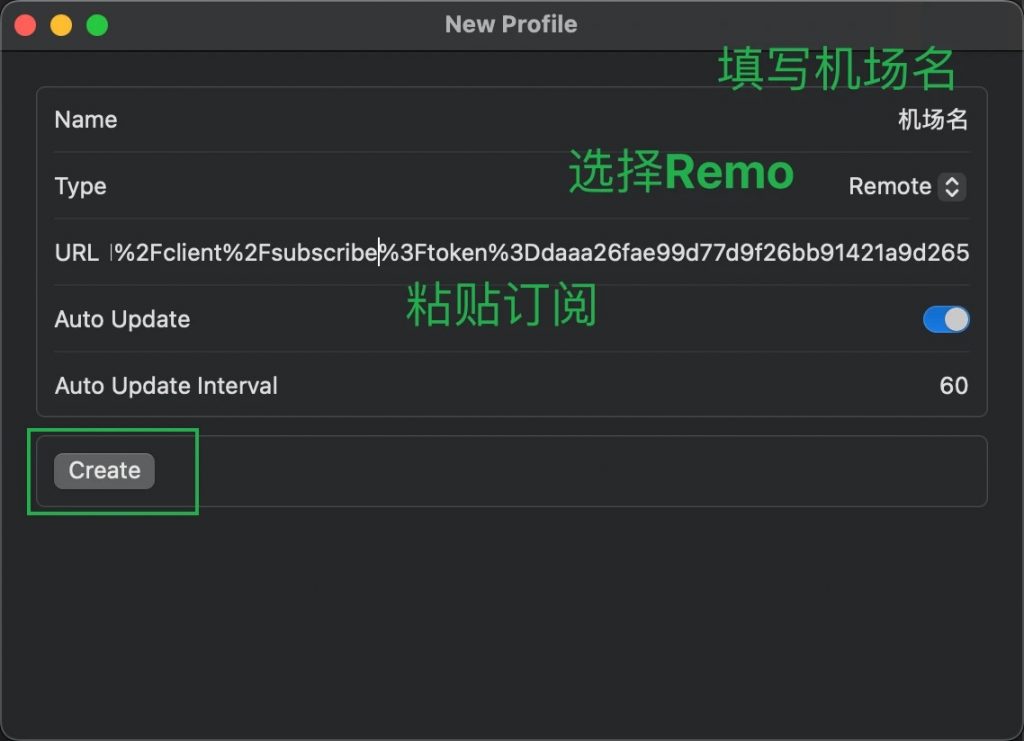
Remote uses a URL that returns a compatible complete configuration. Name and URL fields, along with Local options, are explained in the common guide.
Start the service and select a group
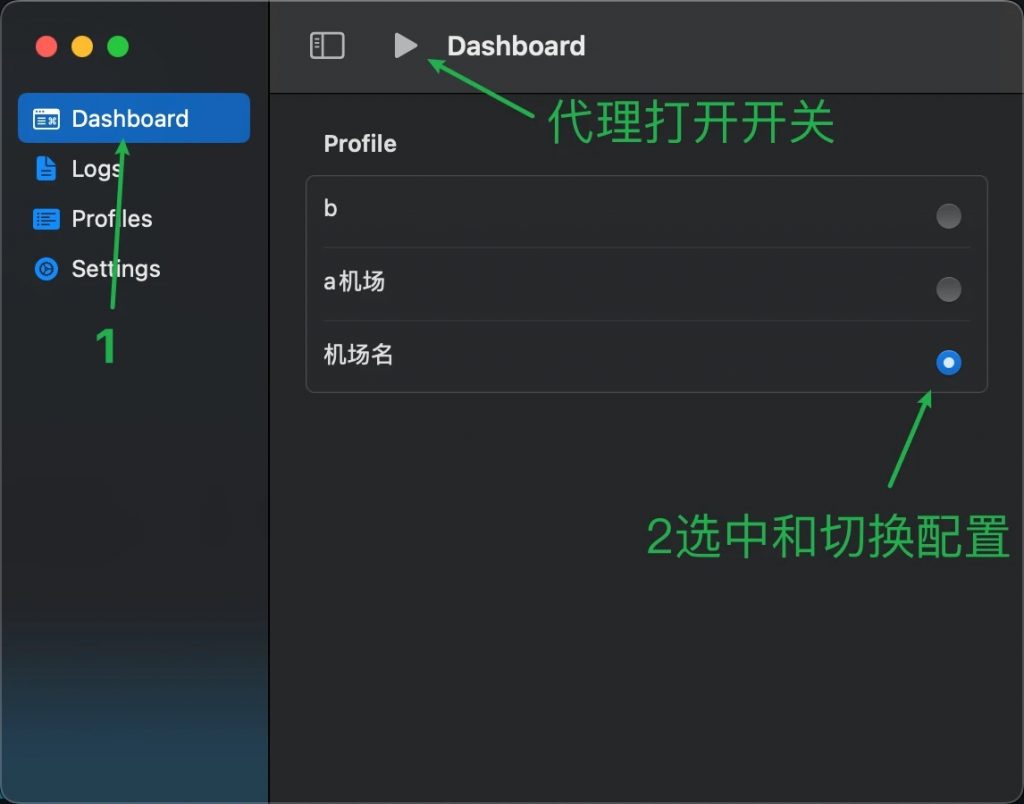
Select a saved profile and start the service. Follow the system prompt for the required network extension or VPN configuration; selecting a profile alone does not start the service.
Groups depend on Selector or URLTest definitions in the configuration. A missing group control alone does not mean the app is broken.
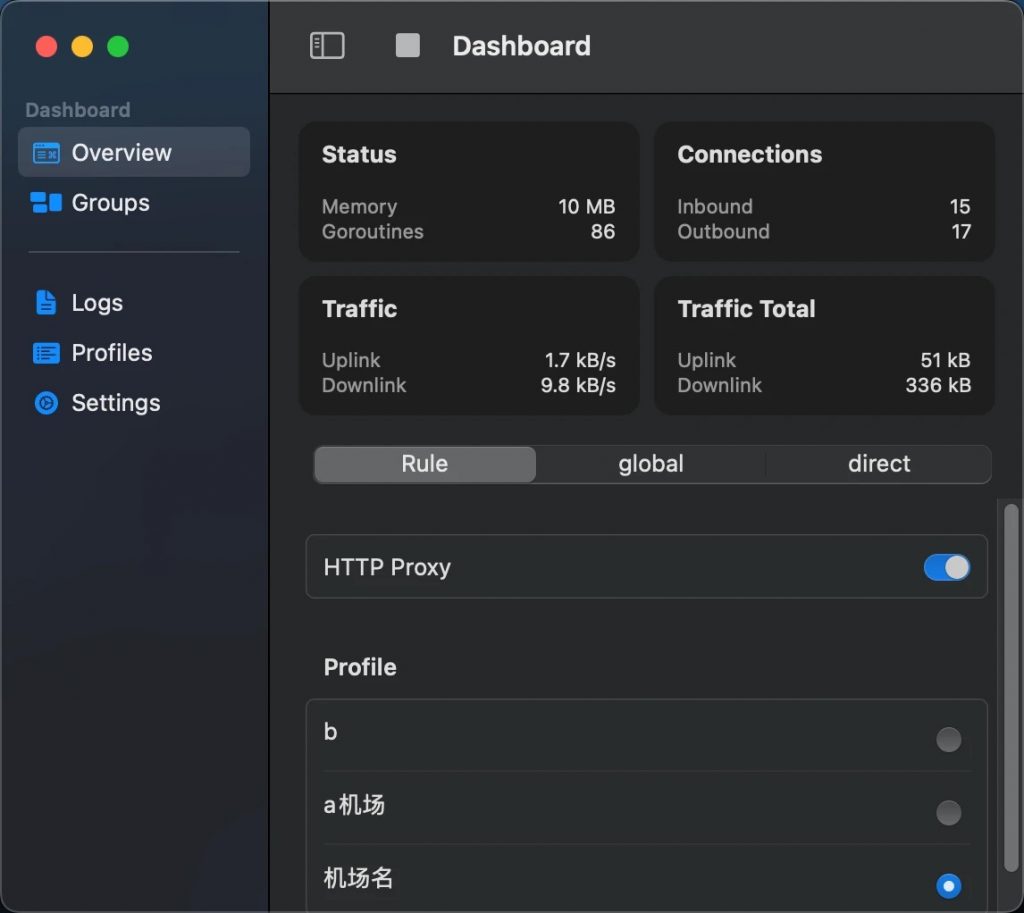
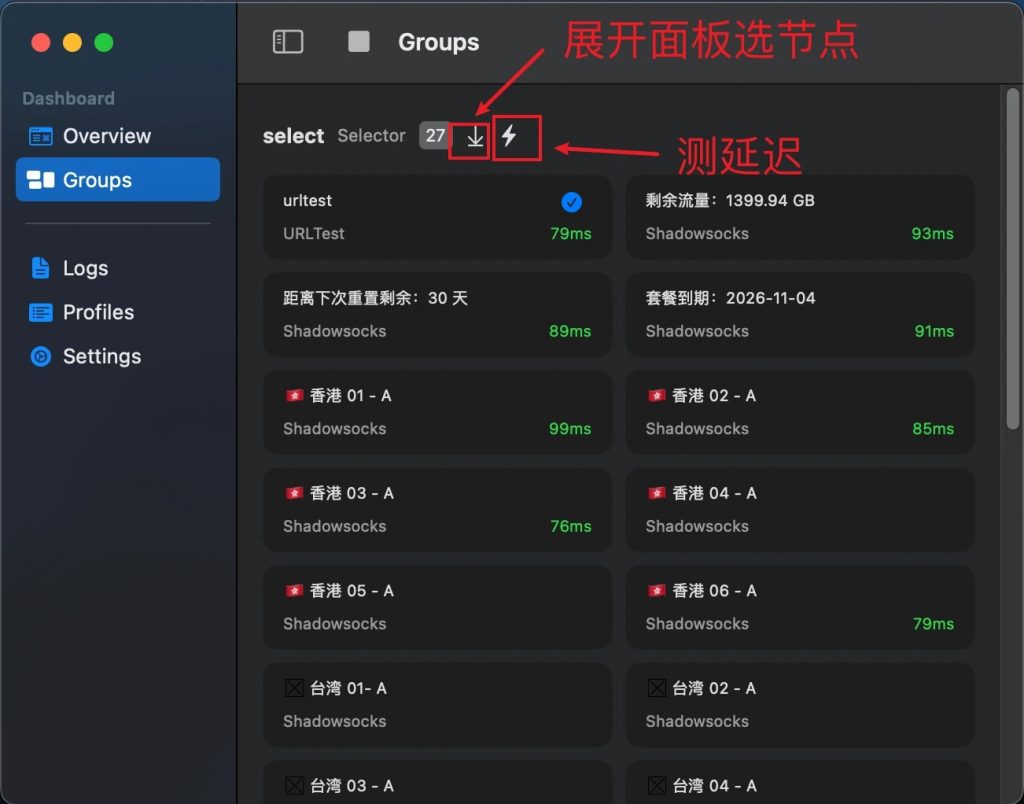
Use the group view to select a node or run a latency test, then verify actual website access. General group and mode behavior is covered in the user guide.
Upgrade and migrate old profiles
The 1.14 Apple developer-account migration made the standalone macOS client a new app. Profiles/settings are not inherited automatically. Before upgrading, keep recoverable config files, remote URLs and necessary settings. You can add them again in the new app; do not delete old data first.
For data migration, the official instructions distinguish the case before first launching 1.14.0-rc.2 or later from the case of earlier migration commands followed by permission prompts. Back up before moving directories or deleting metadata, and follow the matching case. Startup format errors and connectivity failures still need the separate FAQ checks.